Traditional values translated for the next generation. Folkekirken reimagined as an inclusive space, where co-creation and reflection give them new relevance.
Situation
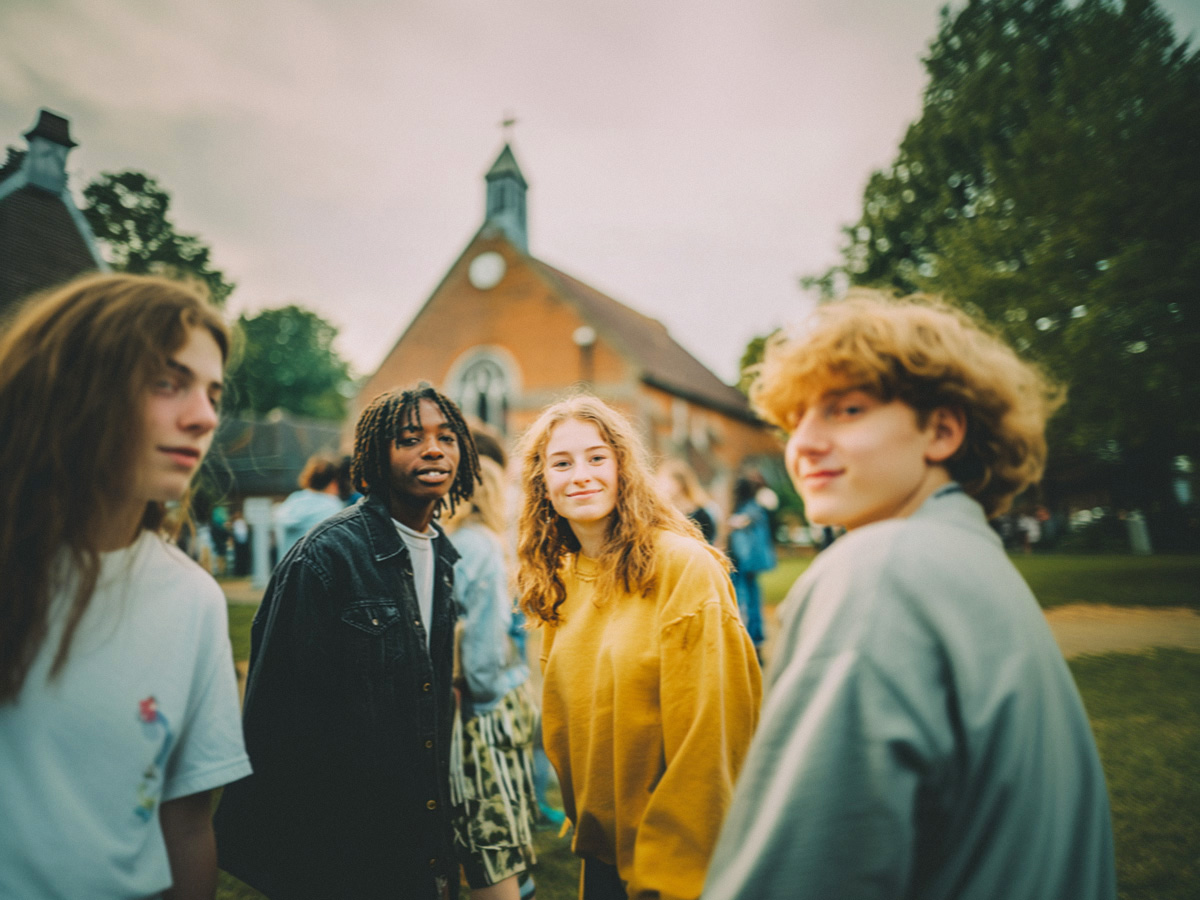
Context & Challenge Folkekirken is Denmark’s largest church, with around 70% of the population as members. While its values are deeply rooted in Danish society, its communication often feels distant to younger audiences.
Young people (16–23) are in a phase of identity exploration and transition, yet still value spaces that support self-reflection, belonging, and meaningful social interaction.
Research Insights & Opportunities
Churches and priests are open to using technology when it aligns with core values. (expert interviews)
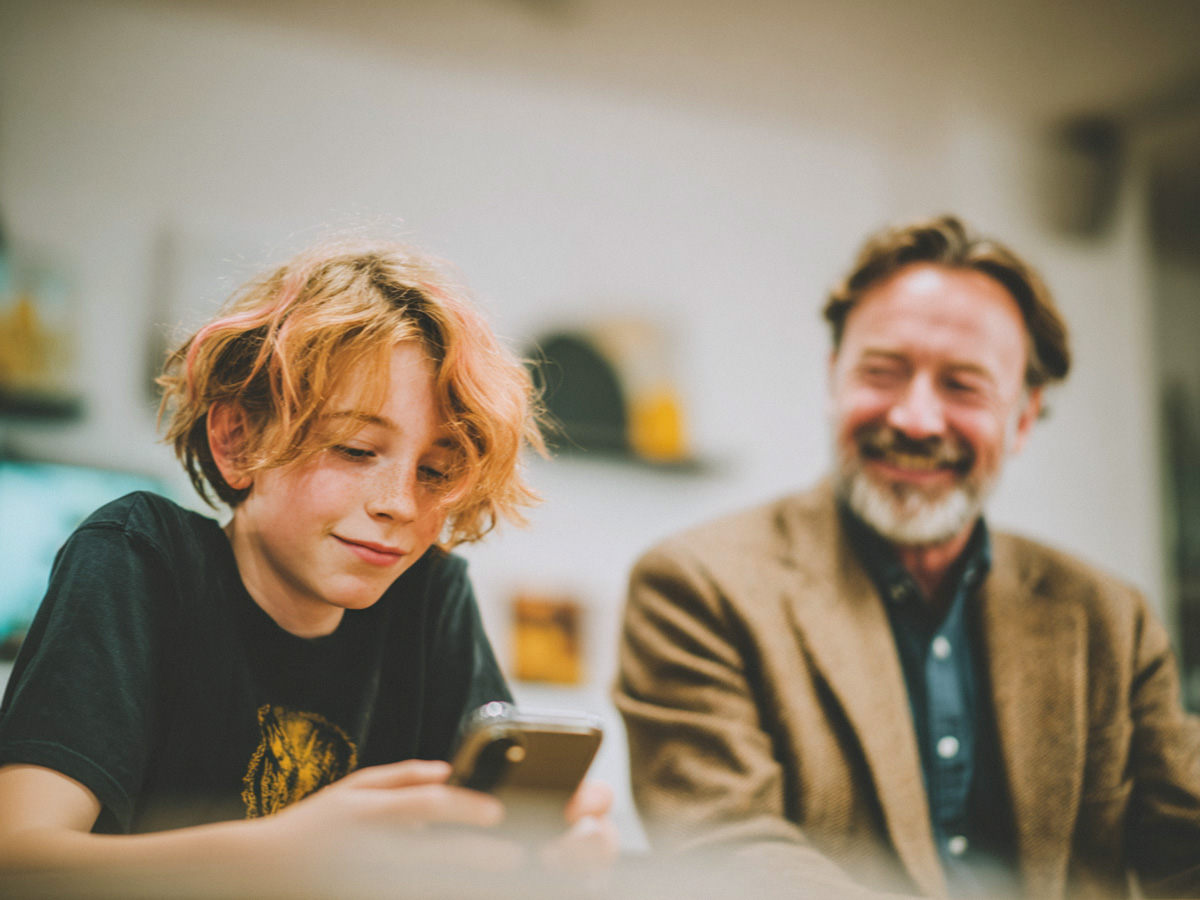
Young people want to be met on their own terms through authentic, relevant communication. (focus groups)
Co-creation strengthens engagement and community. (trend analysis)
Church spaces can support both social gatherings and personal reflection. (observations)
Solution
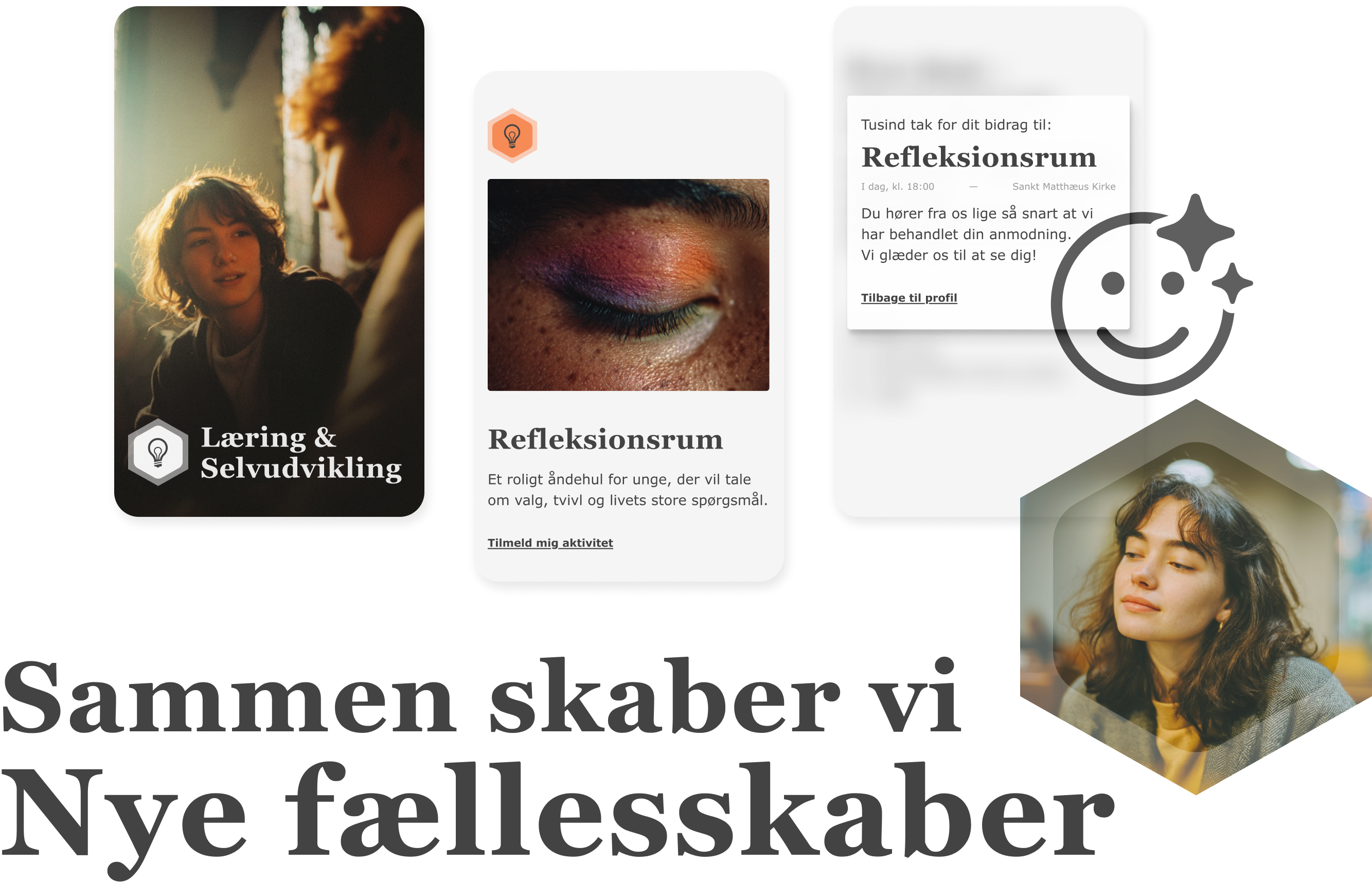
Folkekirken meets young people at eye level, connecting digital and physical spaces through co-creation.
By letting young people shape content and communication, a foundation is built for relevance and long-term connection. A digital product guides them to personal immersion and collective engagement.
¨
Exploration: Digital Design
The hexagon became a central element in the visual system, symbolising balance and harmony while reflecting strength — qualities rooted in folkekirken’s values.
Visualizing Change Opportunities
Key Drivers for Change
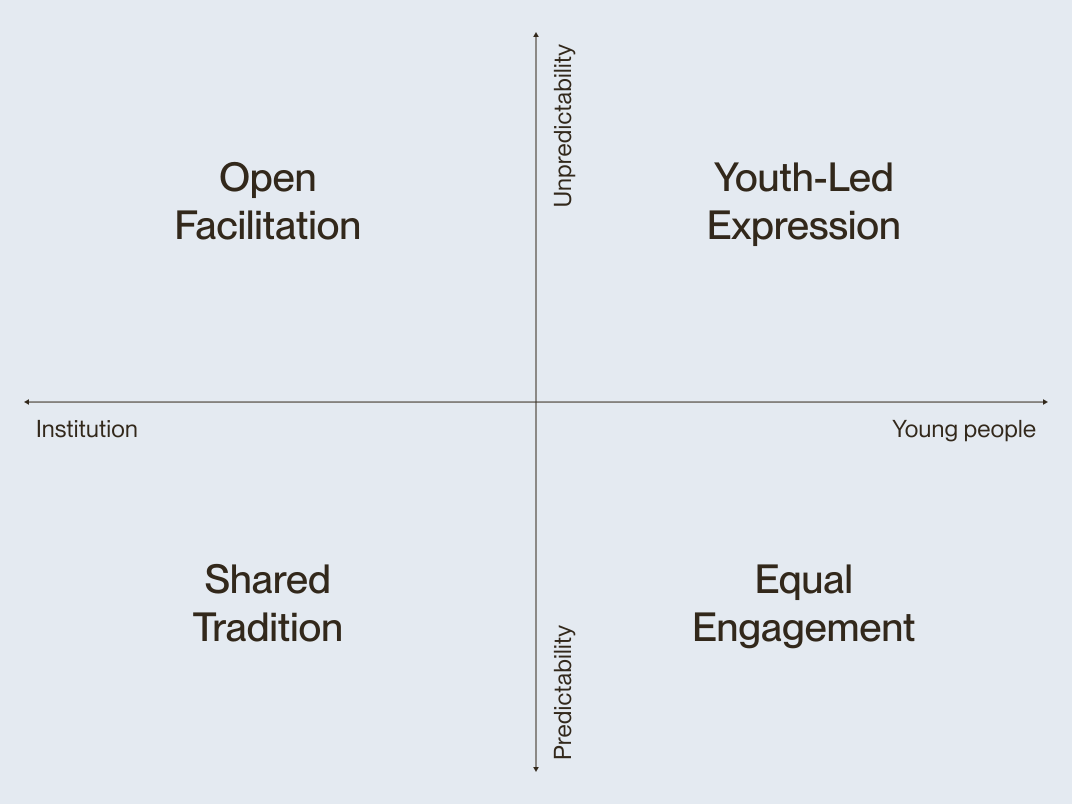
Four Approaches to Co-Creation
Exploration: Brand Strategy
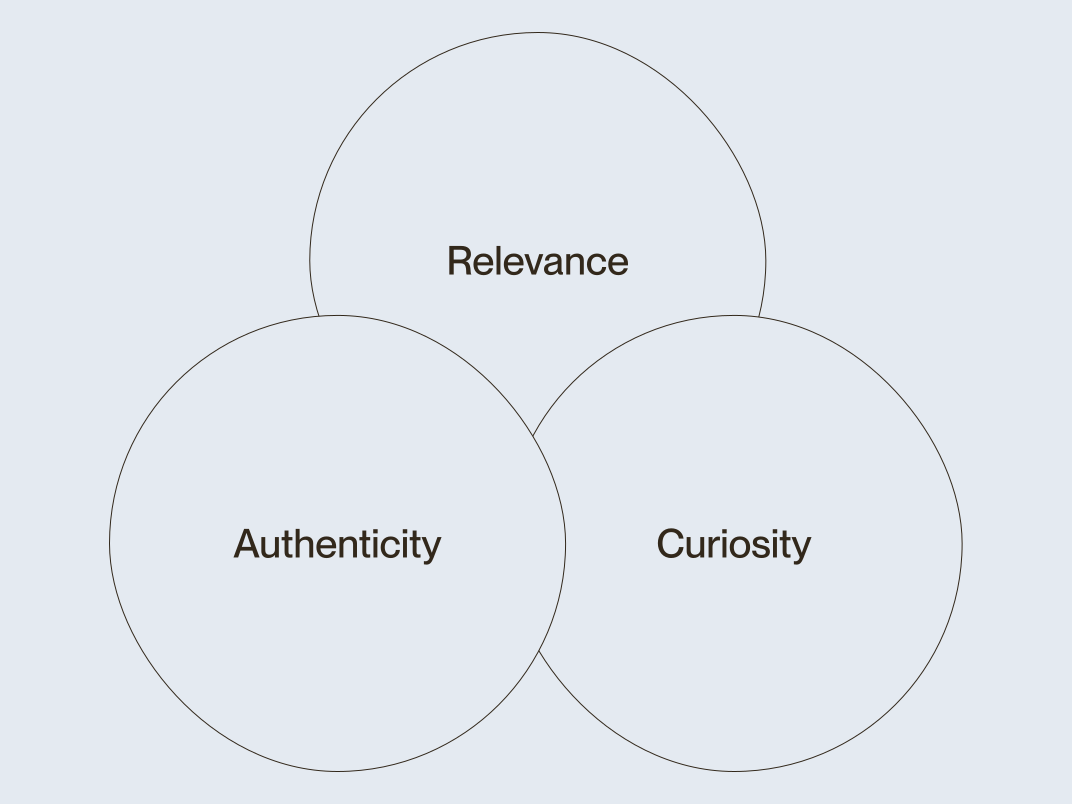
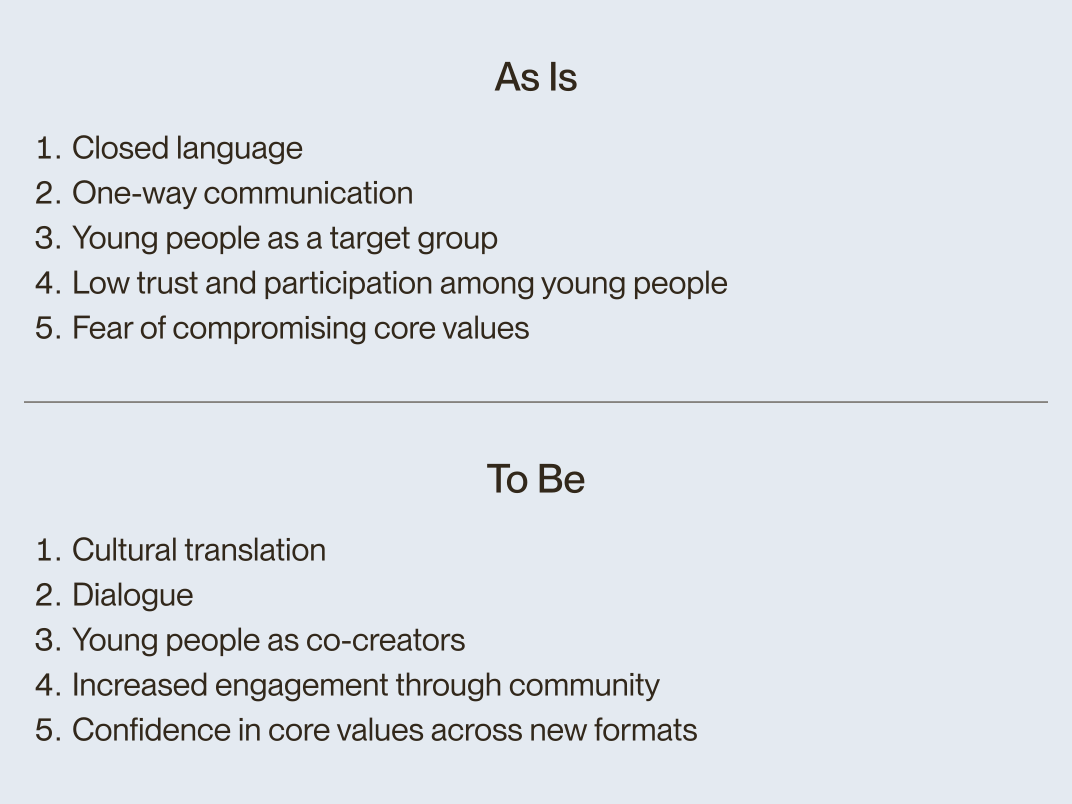
The diagrams provide a visual framework to guide concept development, creating clarity, structuring ideas, and aligning the overall vision.
Reflection
The project gave me a deeper understanding of strategic experience design and how a digital product can shape experiences beyond the screen. Through interviews with young people and priests, field and trend research, and testing prototypes and concepts, I explored how insights could inform both the product and the broader experience.
What I found most interesting was discovering that the two sides were closer than expected. With a more accessible language and a digital tool as a bridge, the church could create opportunities for young people to come together around shared values — not necessarily to practise Christianity, but to create meaningful communities within the church’s spaces.